Initial Bank Reports are required by lenders before approving construction finance, providing a clear and independent assessment of project feasibility. We complete a detailed cost‑verification estimate to confirm budgets, timelines, and risks, ensuring all required documentation and consents are in place prior to funding. Each Initial Bank Report is tailored to the financier’s brief and outlines any risks that may affect the project, giving banks confidence that lending risk is minimised while providing developers assurance that their project is financially supported from the outset.
Elemental Quantity Surveyors is proudly accredited by both the New Zealand Institute of Quantity Surveyors (MNZIQS) and the Australian Institute of Quantity Surveyors, holding MAIQS and Certified Quantity Surveyor (CQS) status. These memberships reflect our commitment to industry best practice, professional standards, and the delivery of independent, reliable cost advice across New Zealand and Australia.

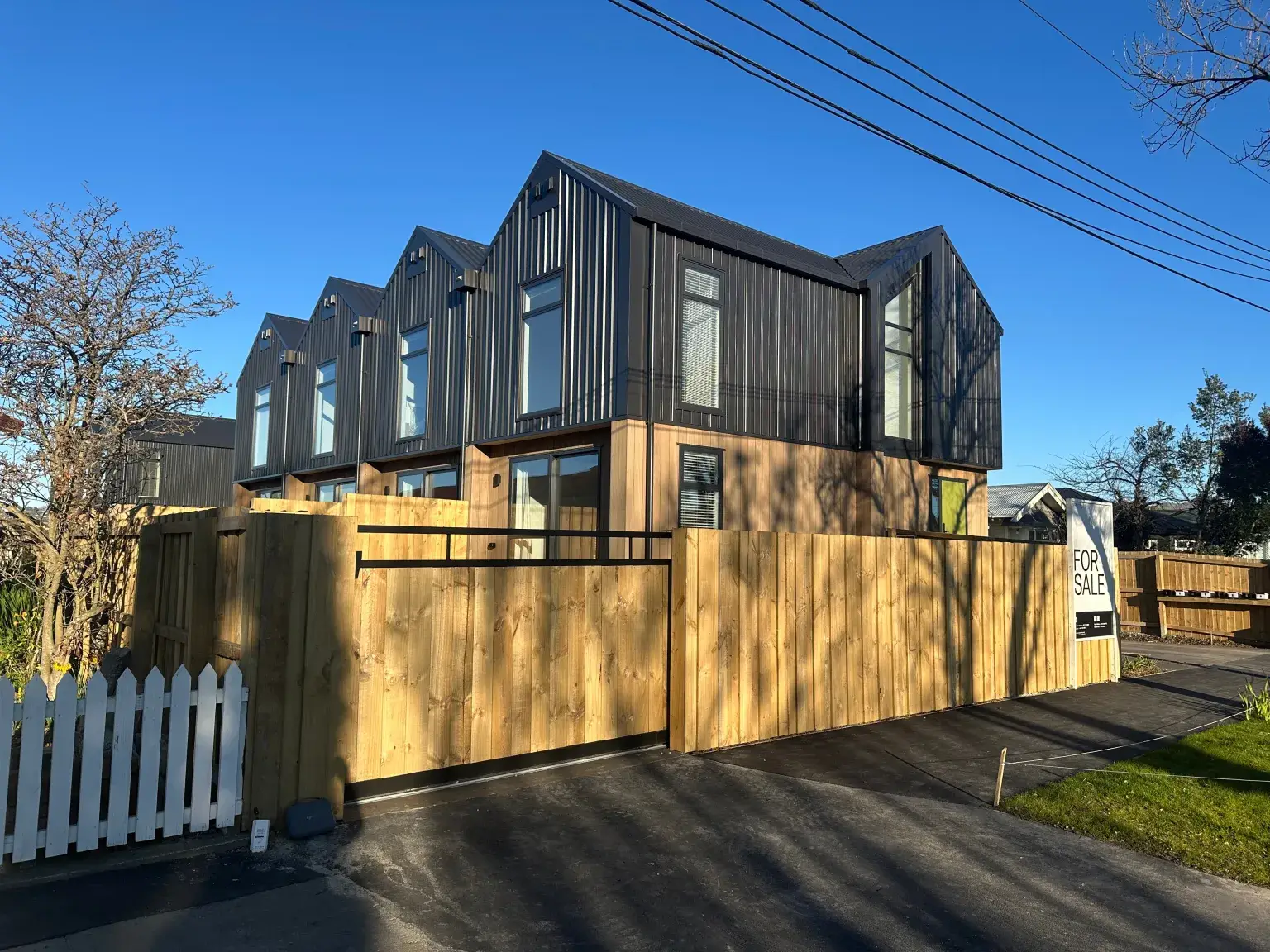
Are you looking for independent Quantity Surveyor in New Zealand? Our team offers an extensive suite of cost-effective, high-quality services for residential, commercial, retail, and industrial projects. Contact us today to discuss your project needs.
The Initial QS Report is typically the first requirement from a financier. It sets the foundation for lending approval, outlining construction costs, timelines, and cashflow requirements. At Elemental QS, we prepare QS reports that meet all major bank requirements, ensuring your project can progress without delay.
EXCELLENT Based on 24 reviews
 Posted on Google
 Dave BurrThe team is great to work with! Best quantity surveyors in ChristchurchPosted on Google
 Paul BelcherCan highly recommend Daniel and the team. Daniel stepped in and helped us with a complex QS project when our team was under the pump and was very impressed with his professionalism and knowledge.Posted on Google
 Shane RobertsonVery professional,Informative and invaluable servicePosted on Google
 Lachie McphailDoes what every good QS should! RecommendPosted on Google
 Sally BurtWe’ve had a great experience working with EQS, especially Dan. He’s incredibly thorough, down to earth, and makes the numbers make sense (which we really appreciate!). Always professional, easy to deal with, and a genuine pleasure to work with. Would happily recommend Dan and the team at EQS to anyone.Posted on Google
 Truckin' with AaronAwesome to deal with. Cheers againPosted on Google
 SubsQS LtdI’ve known Daniel Small for a long time and can genuinely say the quality of work coming out of Elemental QS is solid. They’re practical, responsive, and know their stuff. Clear advice, no fluff, and they understand how things actually work on site. Easy to deal with and easy to recommend others who want tidy, accurate work prepared.
23-29 Albert Street, Auckland 1010
19 Sheffield Crescent, Burnside, Christchurch 8053
Phone : +64 20-493-6595
info@elementalqs.co.nz
Whether you are applying for initial finance or seeking progress drawdowns, Elemental QS is here to make the process seamless. Our QS team works directly with developers, banks, and financiers to ensure every report is clear, accurate, and compliant with lender expectations.
A financier may instruct a Quantity Surveyor to prepare an Initial QS Report prior to funding. Elemental Quantity Surveyors follow the financier’s brief. They certify the cost to complete and comment on project risks. The Quantity Surveyor may request documentation to complete the report. This helps provide the bank a better understanding of the project and its risks.
The financier’s QS brief requires the QS to prepare a detailed construction cost estimate for the proposed development to ensure the Contract Sum is sufficient to complete the works. We also ensure the documentation is sufficient to allow the contractor to submit an accurate price.
We confirm if construction materials in the contract match the allowances in the builder’s tender submission.
One of the most important documents is the construction contract. We review the executed construction contract and comment on the suitability of the agreement. We provide feedback on specific clauses in the contract, including the contract sum, programme, deposits, security (bonds or cash retention), early completion bonuses, delay damages, liquidated damages, cost fluctuations, and more. You must execute this contract before the first progress drawdown report. We recommend completing a Tripartite Agreement to give the financier step-in rights to the contract if the developer cannot complete the project.
Depending on the contract sum and project type, we may request a copy of the most recent construction program.
The program must show clear commencement and practical completion dates. This helps us monitor progress on site monthly and update the financier in future reports. Typically, we allow a one-month contingency in the program to account for unforeseen delays.
At Elemental Quantity Surveyors, we compare our construction cost estimate with the builder’s trade summary. This cost comparison allows us to identify and inquire about trades that may differ significantly from our estimate. In our experience, some builders are aware that the terms of the contract do not allow for deposits or offsite materials. In the past, we have seen builders inflate their earthworks and substructure packages in order to ease their cash flow and cover deposit payments to their subcontractors/suppliers. While we understand that subcontractors may request deposits, we do not recommend paying for offsite materials, as this represents prepayment for work not yet completed and exposes the financier to additional risk should the builder be unable to finish the project.
If the developer is also the builder, we will review a trade lettings schedule to confirm that the percentage of trades let is reasonable, depending on the stage of the project (e.g., before site commencement, we would expect to see earthworks, slabs, services, windows, and carpentry trades let). This varies from project to project. We understand that in the current market, some subcontractors may not submit a fixed-price quote for works that may not commence for six months, and our commentary may reflect this.
Our QS report comments on the resource consent and building consent. We must confirm that the council has issued consents for construction and review all mandatory inspection stages from the council and your consulting engineers. A QS monitors inspection reports throughout the project and ensures that we append the required documentation to our reports. Quantity Surveyors do not recommend payment for restricted building work if the council has not consented to it.
We confirm that all relevant consultants (architect, structural engineer, civil engineer, services engineer, geotechnical engineer, building surveyor, engineer to the contract) hold current professional indemnity insurance policies with adequate coverage. The construction contract may specify the required insurance limits for these consultants. We monitor insurance policies throughout the duration of the project and provide updates in future progress reports
This includes contract works insurance, public liability, motor vehicle insurance, plant and equipment insurance, etc. The Quantity Surveyor is required to confirm that the builder’s insurance policies are current before the first drawdown. We recommend that the contract works policy be site-specific, name the financier as an interested party, and cover the full contract sum. We also monitor the insurance policies throughout the duration of the project and provide updates in future progress drawdown reports.
The geotechnical report is an important document for a Quantity Surveyor. We carefully review the geotechnical engineer’s report to identify any rock, soil contamination, or groundwater issues on site. For example, if we encounter rock, we confirm what allowances the builder has included for breaking up, excavating, and removing it. If the builder has made no allowances, we will ask for a schedule of rates for any variations related to latent conditions, which we will use if such variations arise.
We will ask the land surveyor to provide a survey and/or statement confirming that the proposed building has been designed within the title boundary and does not encroach on neighboring properties.
Development costs play a crucial role in determining the total cost to complete. Depending on the financier’s requirements, we may require a breakdown of any costs outside the building contract, including acquisition costs, professional fees, statutory fees, authority fees, legal fees, holding costs, marketing and sales commissions, and any works outside the contract sum (e.g., landscaping, swimming pool, client-supplied items).
If the bank requires a valuation report, we will review it and compare it with the information we have received. We will confirm whether the valuation report aligns with the design documentation used to prepare our report.
If finance is contingent upon pre-sales or lease agreements, we will review the agreement—similar to the valuation report—and comment on sunset clauses, specifications, and other information to ensure they align with the builder’s scope of works.
Initial Bank Reports are independent assessments prepared for your lender. These specialised reports provide the crucial financial assurance your bank requires to secure and manage your construction loan, protecting their investment and keeping your project funded.
The cost varies depending on the size and scope of your project. However, to give you a general idea, the average cost of an Initial QS Report prepared by Elemental Quantity Surveyors in Christchurch is $3,400 (excl. GST).
Time & Cost Verification Reports typically cost $1,500 (excl. GST).
Our target lead time for an Initial QS Report is 5 working days, ensuring you get the cost clarity you need without delay.
An Initial QS Report is a pre-construction risk assessment for your Christchurch bank. We analyse all plans and contracts against their brief to validate the budget and feasibility, securing your loan approval.
A Bank Drawdown Report occurs during construction. We inspect site progress to verify completed work, authorizing your bank to release the next stage payment.
Yes, Elemental Quantity Surveyors provides Bank Drawdown Reports across New Zealand, servicing clients in Auckland, Wellington, Christchurch, Hamilton, Tauranga, Dunedin, Wanaka, Queenstown, and all surrounding regions. We also support projects in provincial and rural areas, ensuring consistent, independent QS reporting wherever your development is located.